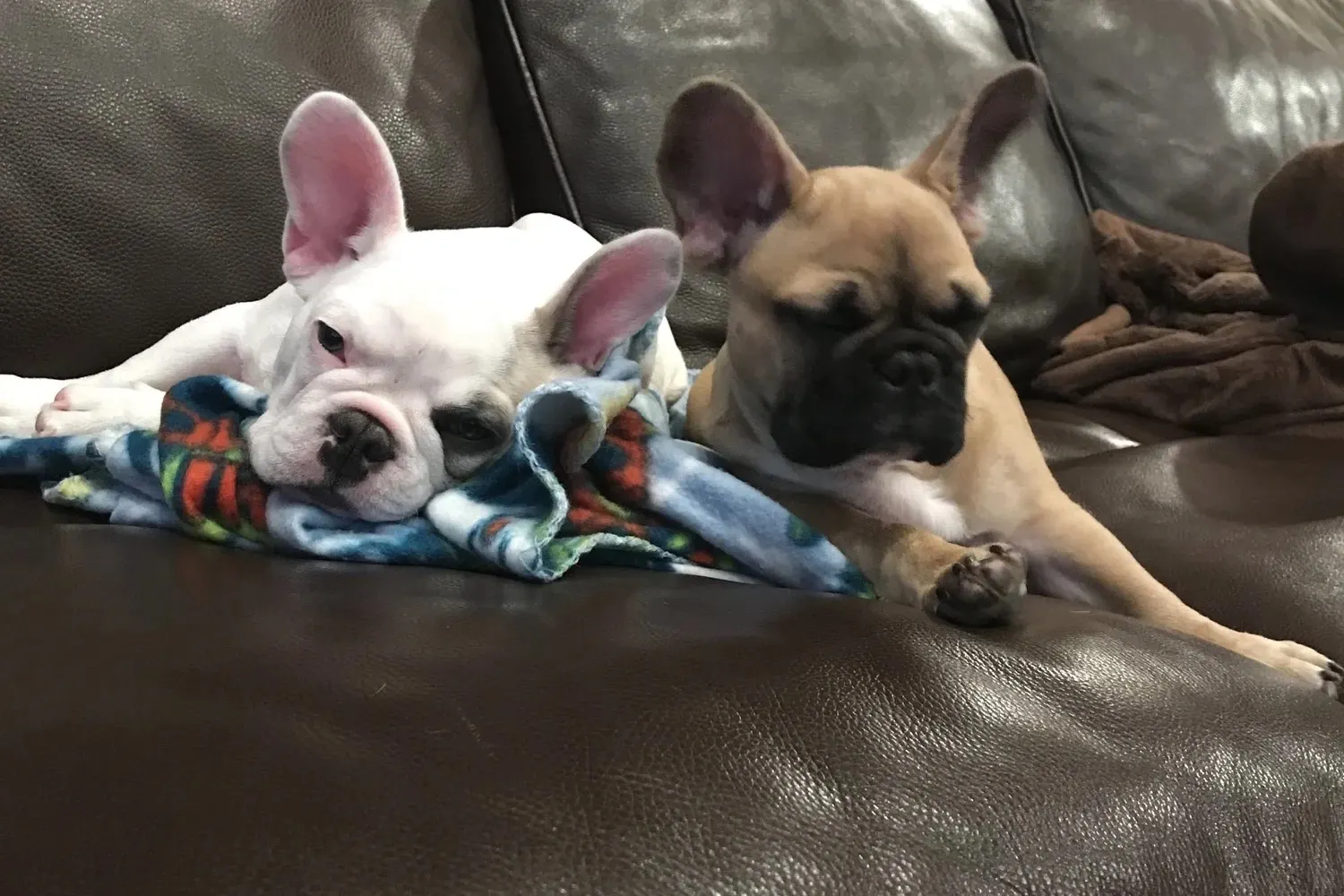
A white French Bulldog and a fawn French Bulldog resting together on a couch
★ Ethical Frenchie tips marked Frenchie 101

Meet the Big Sib

Bringing a Frenchie puppy home to a house with an older pup, step by step.

6Steps
110+Tips
14Expert sources
2026Updated
★ = Our tip From raising Frenchies since 2017
Vet & trainer sourced AKC, VCA, Dogs Trust & more
Any breed of big sib Same steps for every older pup
Text us anytime 212-739-0182
Before the big hello

Hi friend! Your pup is about to become a big sib.

Big or small, rescue mix or fellow Frenchie, every older pup needs time to adjust to a new puppy. A slow, kind introduction is how a surprise turns into a best friend.

We gathered what vets, trainers and shelters recommend, added what we've learned placing Frenchie puppies in homes with other pups, and put it in one place. In this guide your older pup is the big sib.

Go slow, keep it pawsitive, and text us anytime ♥

Three French Bulldogs sitting side by side
What's inside

Six steps to a happy two-pup home

How to use it: read Steps 1 and 2 before pickup day, keep the fridge list handy for the first month, and look for the ★ for our own Frenchie tips.

Step 1

Before pickup day


The best introductions start a week or two before the puppy arrives. Get the house, the gear and your big sib ready, so nothing about the change gets blamed on the puppy.
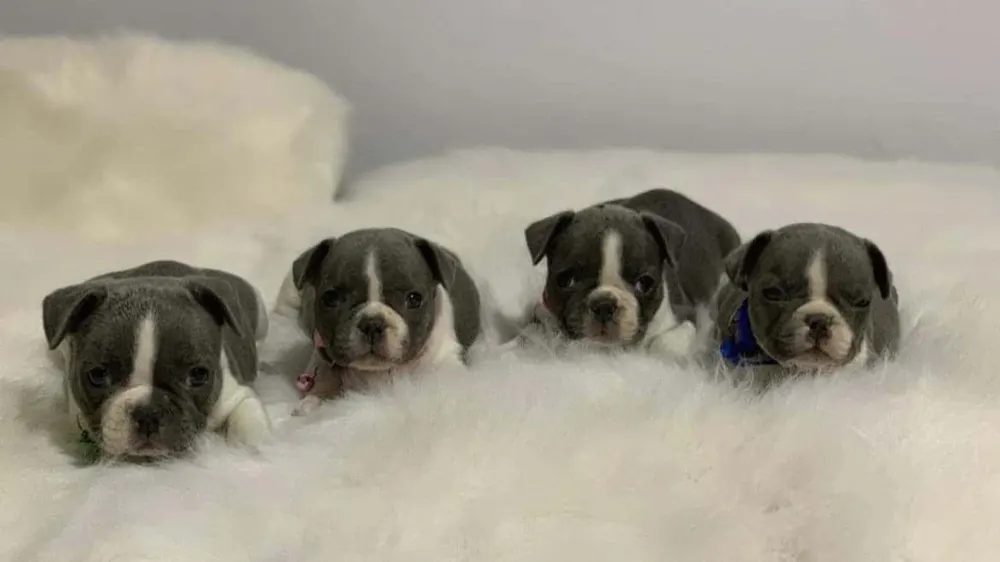
A litter of blue pied French Bulldog puppies on a fluffy blanket

Is your big sib ready?

Be honest
  • Think about your big sib's history with other pups: social butterfly, picky, or always an only child?
  • Pain, arthritis, hearing loss, anxiety or a cranky senior streak all change the plan. Big sib's comfort comes first.
  • Make sure big sib's vaccines and parasite prevention are current, and know where the puppy is in his shot schedule.
  • Line up a positive-reinforcement trainer now, just in case. It's easier than searching mid-crisis.

Set up two zones

Each pup gets a safe space
  • Puppy zone: a crate plus an exercise pen or gated area, away from big sib's favorite spots.
  • Big sib's retreat: a bed or crate the puppy can't reach, for naps and alone time.
  • Put an extra pen or crate where the family hangs out, so the puppy learns to settle when everyone settles.
  • Moving big sib's bed or bowls? Do it a few days early so the change isn't linked to the puppy.
  • Do a sweep: pick up toys, bones, chews and treats big sib might guard. Check under the couch and between cushions.
  • Make a short list of things big sib loves most (the couch, your lap, a certain toy). Plan to manage those.

Practice and prep

  • Scent swap: bring home a blanket or toy that smells like the puppy so big sib can sniff it first.
  • Set up the puppy's crate and bed early. Big sib gets to investigate them before anyone moves in.
  • Brush up big sib's basics with treats: sit, stay, come, and settling on a mat or in a crate.
  • Practice short naps behind a baby gate or closed door, so the gate feels normal, not like punishment.
  • Agree on house rules with everyone at home. Puppy jumping is cute now, less cute at 25 pounds.
  • Keep big sib's routine exactly the same: meals, walks and cuddle time at the usual hours.
  • Gear up: two 4 to 6 ft leashes (no retractables), baby gates, a pen, a crate, and separate bowls, beds and toys.
  • Recruit a helper for the first meeting: one person per pup.
★ Ethical Frenchie tip

Have more than one older pup at home? Introduce the puppy to one at a time. Two adults together can gang up on a puppy, even when each would be sweet alone.

Step 2

The first hello


First impressions matter. Meet somewhere neutral, keep it short and calm, and let the pups set the pace.
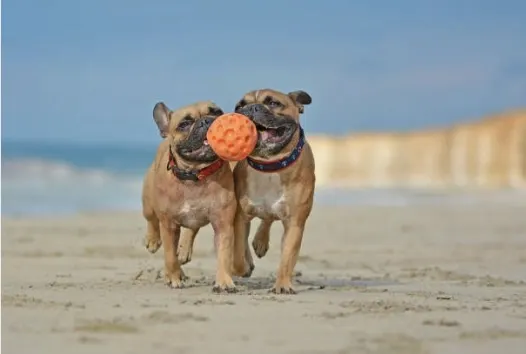
Two fawn French Bulldogs running on a beach sharing an orange ball

Pick the spot

Neutral ground
  • Meet outside the home: a quiet park corner, a neighbor's yard, or a sidewalk neither pup thinks of as "theirs".
  • Until your vet says the puppy's shots are done, choose a spot with little pup traffic.
  • Skip mealtimes and late evenings, when pups are more territorial or tired.
  • If you must meet at home, use the yard or your largest room. Avoid hallways, doorways and food areas.

How to do it

  • One handler per pup, both on loose leashes. Tight leashes tell a pup something is wrong.
  • Let the puppy burn off some wiggles first with a short play session.
  • Start with a parallel walk about 10 to 15 ft apart, each pup focused on their own human.
  • Treat both pups for calm behavior and for glancing at each other and then away.
  • Close the gap slowly while both stay relaxed. Back up if either gets too excited.
  • Allow a brief sniff hello (a few seconds), then keep walking. Repeat if it goes well.
  • Ignoring each other is a perfectly good outcome. Never force a hello.
  • Stay calm yourself. Pups read your mood. If you need to separate them, do it quietly.
  • End on a good note, before anyone gets overstimulated. Several short meetings beat one long one.
  • Finish with a walk together, 15 minutes up to an hour, side by side.
★ Ethical Frenchie tip

On delivery day, have a second person walk big sib outside before the puppy arrives, so the first hello happens on the sidewalk, not in your doorway. If big sib is picky or leash-reactive, ask a trainer to help with the first few meetings.

Step 3

The first days at home


Think small and slow. A puppy with a little space and a big sib with a lot of patience is the goal for week one.
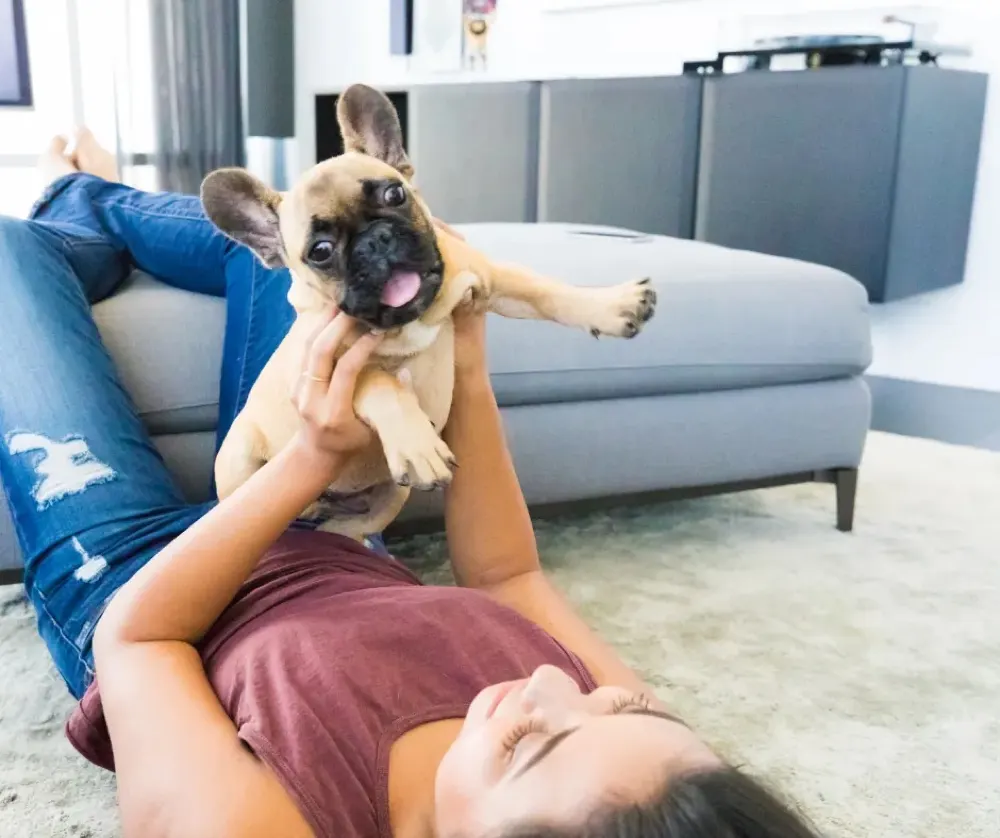
A woman lying on a rug lifting a fawn French Bulldog puppy

Walking in the door

  • Take the puppy to the potty spot first.
  • Let big sib go inside first, then bring the puppy in. Some trainers do the reverse: whatever keeps things calm.
  • Pack away big sib's toys, bones and bowls for the first hour or two.
  • Keep both pups on light indoor leashes at first, so you can calmly guide them apart.
  • Keep day one quiet: family only, no visitors, no big welcome party.
  • Give the puppy crate time after the excitement. Puppies sleep up to 20 hours a day.

The first week

Barriers are your best friend
  • Let them see and sniff each other through a gate, pen or crate while you reward calm.
  • If big sib looks relaxed near the gate, treat. If either charges or stiffens, add distance.
  • Do things near each other with two people: one treats big sib while the other plays with the puppy.
  • Keep together-time short and supervised, then slowly make it longer.
  • No run of the house for the puppy in week one. Open up more space as potty training improves.
  • Sleep apart at first, to avoid overnight misunderstandings.
  • Bring a blanket from the puppy's first home and keep the same food at first.
  • Set up bowls and beds in separate areas after the first couple of hours, so each pup can eat and rest alone.
★ Ethical Frenchie tip

Don't panic over a grumpy first day. Some big sibs drool or act testy for about 24 hours because of the new puppy smell. It usually fades within a couple of days. If something goes wrong, separate calmly, check both pups, rest, and restart more slowly.

Step 4

House rules for two


Most squabbles happen over food, toys and favorite spots. Good setup now prevents problems later.
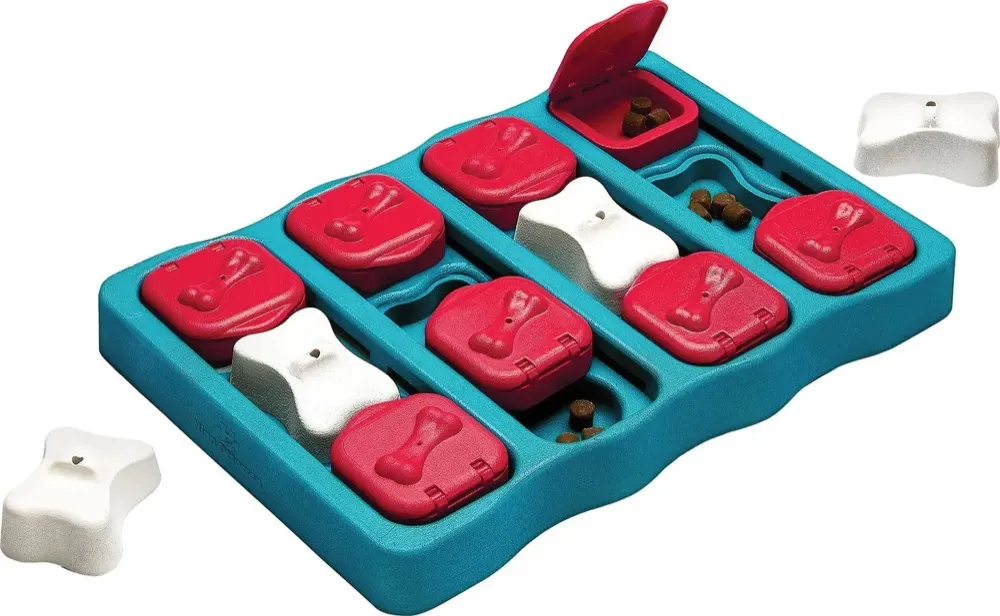
A treat puzzle toy for pups

Supervise, then separate

  • Watch every moment together for the first weeks, including exciting ones like the doorbell.
  • When you can't watch, separate them: crate, pen, gate or closed door.
  • Build in daily breaks. Puppy in the pen while big sib roams, then swap.
  • Give both pups water, toys and something to do while they're apart.
  • Never leave them alone together for at least the first one to two weeks.
  • Keep play supervised until the puppy is at least 6 months old.

Mealtime

Separate, every time
  • Feed in separate rooms, or with the puppy in his pen. Many families keep this up for good.
  • Put big sib's bowl down first.
  • Never share bowls, and pick them up when meals end. Even empty bowls can start a squabble.
  • No free-feeding or leaving food out to graze.
  • Set out more than one water bowl.
  • Any gulping, staring, freezing or growling near food? Feed them fully out of sight of each other.

Toys, chews & favorite spots

  • Each pup gets their own bed, bowls and toys.
  • For the first few weeks, give chews and toys only when the pups are apart. Bring favorites back slowly.
  • Keep fetch as a one-pup game until you know how ball-crazy each one is.
  • Guarding is normal and usually fear, not "dominance". Manage it first, then train.
  • Teach the puppy not to steal big sib's things, and reward big sib for staying relaxed when the puppy comes near.
  • "One for you, one for you": treat each pup in turn while sitting apart, slowly closing the gap.
  • If guarding pops up, stay calm, don't punish, send each to a mat, and remove the trigger before reuniting.
  • Crated pups and pups who wrestle should wear breakaway collars, or none at all, so nobody gets caught.

Give the puppy an outlet

  • A tired puppy pesters less: short play, training games and puzzle toys.
  • Puppy class or a puppy playgroup lets him play rough with friends his own size.
  • Teach "that's enough" with a short time-out, so big sib doesn't have to be the bad cop.
  • Walk together on loose leashes once the vet clears the puppy. It's a great bonding activity, even for a big sib who won't play.
★ Ethical Frenchie tip

Crate the puppy whenever you're out until the two are true buddies. Frenchie puppies overheat fast: keep play short, the room cool and water out, and call a break at heavy panting. Wrestling stays on the floor, not off the couch.

Step 5

Reading the room


Pups talk with their bodies. Learn the signs, step in early and gently, and you'll stop most problems before they start.
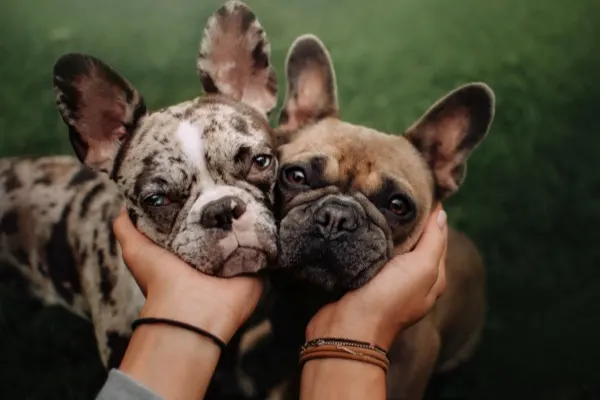
Two French Bulldogs cheek to cheek held in a person's hands

Happy signs

  • Play bows, loose and wiggly bodies, wide sweeping wags
  • Soft face, open mouth, choosing to sniff, sit or check in with you
  • Taking turns: chasing and being chased, top and bottom
  • Lots of little pauses in play
  • Ignoring each other or wandering off (totally fine at first)
  • Big sib walking away from a pushy puppy. Reward that smart choice!

Time to step in

  • Stiff body, hard stare, deep growl, bared teeth
  • Lunging, charging the gate, or trying to bite the puppy
  • Cowering, trying to flee, or one pup always pinned underneath
  • Quiet stress: lip licking, head turned away, leaving when approached
  • Big sib getting more worked up when the puppy yelps, instead of backing off
  • Can't stop staring at the puppy

Raised hackles alone just mean excitement. Read them with the rest of the body.

How to step in

Early, calm, quiet
  • Use a calm voice. No yelling, and no interrupting every few seconds either.
  • For mild tension, call one pup away or send each to a bed, then let them relax.
  • Redirect with a treat, a toy, or "sit". Walk backward calling them, or pick up both leashes and move apart.
  • For barking, lunging or snapping, separate right away and give both pups hours or even days to cool off.
  • Puppy time-out: if the puppy ignores big sib's "no thanks", remove him for about 20 seconds, then try again. Still pestering? Pen time.
  • Consent test: every minute or two, gently move the more playful pup away. If the other comes back for more, play on. If not, play is over.
  • Never punish a growl. It's a useful warning, and punishing it can lead to bites without warning.
  • Don't just "let them work it out". Big sib learns you won't help, and the puppy learns bad manners.
Step 6

Big sib comes first


Your older pup's world just changed. Protecting their routine, space and patience is what makes a friendship possible.
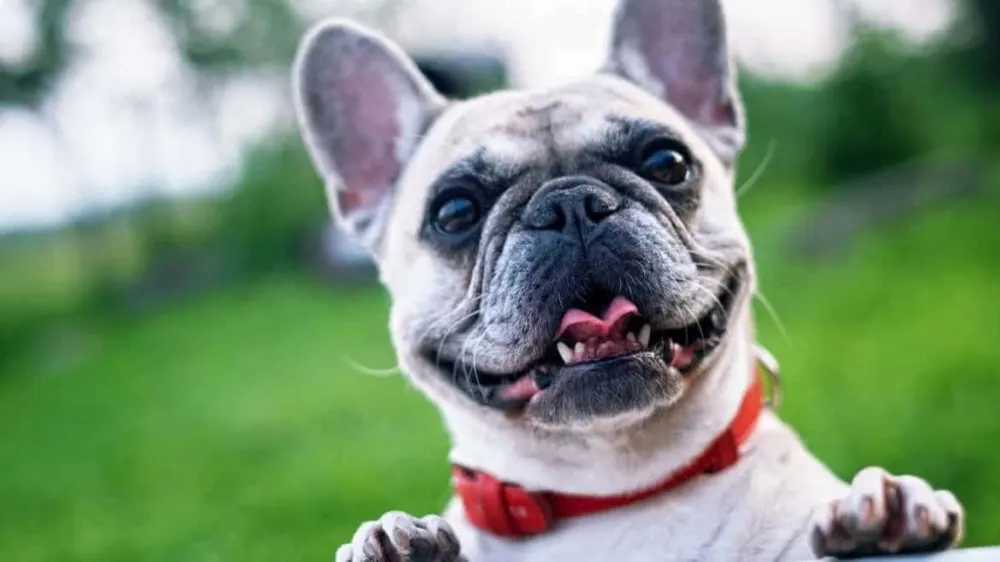
A smiling pied French Bulldog with a red collar

Keep big sib's world the same

  • Same meals, walks and cuddle times as before the puppy.
  • Greet big sib first, leash them first, feed them first. Small things add up.
  • Keep big sib's walks and games going without the puppy tagging along every time.
  • Spend one-on-one time with each pup every day, and give big sib extra love.
  • Schedule quiet time away from the puppy. Big sib will be happier to see him afterward.
  • Treat big sib whenever the puppy appears, so "puppy" starts to mean "good things happen".

Normal corrections vs. real trouble

  • Normal: a growl, lip curl, air snap or quick snarl that stops the moment the puppy backs off.
  • Normal: a puppy yelping in surprise at a growl. A yelp doesn't mean he's hurt.
  • Not okay: a correction that keeps going after the puppy has backed away, or bites that cause harm.
  • Puppies under about 4 months can't read subtle signals yet, so expect to step in more often.
  • Don't punish big sib for telling off an unruly puppy. Teach the puppy that manners earn freedom.
  • Even a saint has a limit. "Puts up with it" isn't the goal. Be big sib's advocate.
  • Frail or senior big sib? Keep a bouncy puppy physically separate when you can't watch, to protect joints and hearts.
  • Give the puppy some training (sit, look, come) right next to big sib, so he learns calm around his sibling.

Not the goal:

  • Instant best friends
  • Big sib as babysitter
  • "They'll work it out"

Some pups bond fast, some take months, and some simply live together peacefully. A calm, comfortable home is a great outcome.

Timeline

What's normal, and when


Every pair is different, but most follow a similar path. Older pups almost never welcome a puppy right away, and that's okay.

A smiling veterinarian with a black French Bulldog on the exam table
  1. Day 1 Short, calm, supervised. Grumbles and ignoring are normal.
  2. Week 1 Puppy zone, gate time, never alone together.
  3. Weeks 2-3 Toys come back slowly. Some harmony starts.
  4. Weeks 4-5 Many big sibs start choosing to play.
  5. 4 months Puppy gets better at reading big sib's signals.
  6. 6 months Keep supervising play until at least now.
10-15 ftStarting distance for the first parallel walk
4-6 ftLeash length for the first hello. No retractables.
20 secA puppy time-out before trying again
20 hrsHow long puppies sleep a day. Crate naps help everyone.

When to call for help

  • Call a positive-reinforcement trainer or behaviorist if big sib lunges at or tries to bite the puppy, stares hard, stiffens, or charges the gate.
  • Fear that doesn't settle, or guarding that keeps getting worse, deserves a pro.
  • After a real scuffle, separate fully, rest for a few days, and get expert help before restarting more slowly.
  • See your vet right away if either pup is hurt.
  • Call your vet if the puppy won't eat or drink on his first day home.
  • Don't wait for it to fix itself. Problems get harder the longer they go on.
★ Ethical Frenchie tip

We're part of the team. Send us a video of a meeting that worries you and we'll help you read it. Text 212-739-0182 anytime.

Print it, stick it on the fridge

The fridge list


The whole guide on one page, for the first month with your new puppy and big sib.

Do

  • Meet on neutral ground, one handler per pup, loose leashes
  • Keep every meeting short and end on a good note
  • Give each pup their own zone, bed, bowls and toys
  • Feed separately, big sib first, and pick bowls up after
  • Supervise every moment together
  • Crate or gate the puppy whenever you're out
  • Keep big sib's routine and one-on-one time
  • Reward calm, and big sib walking away
  • Step in early and quietly
  • Keep play short and cool. Frenchie puppies overheat fast.

Don't

  • Force a hello, or meet in a doorway or hallway
  • Leave them alone together in the first weeks
  • Leave toys, chews or food lying around early on
  • Let the puppy have the run of the house in week one
  • Punish a growl
  • Make big sib the babysitter or bad cop
  • "Let them work it out"
  • Visit off-leash parks before the vet clears the puppy's shots
  • Expect instant best friends
  • Wait to call a trainer if things feel wrong
From our family to yours

Here's to double the love

Questions about introducing your puppy? We're here before pickup day and long after. Ask us about extra socialization around older pups before your puppy comes home.

Recommendations gathered from the American Kennel Club, VCA Animal Hospitals, Dogs Trust, Purina, Karen Pryor Clicker Training, Dogs Playing for Life, Animal Humane Society, San Diego Humane Society, Peninsula Humane Society & SPCA, Show Dog Prep School, So Much Pet-ential, Astro Loyalty, CVETS and Where's the Frenchie. ★ tips are Ethical Frenchie's own. Updated October 2026.

Get the PDF
